

Service area 11
Financial Technology (FinTech) & Payment Infrastructure
We build software and integrations for digital payments, financial operations, transaction workflows, and payment-related intelligence. Regulated activities and handling funds require suitable authorisations and partners.
Overview
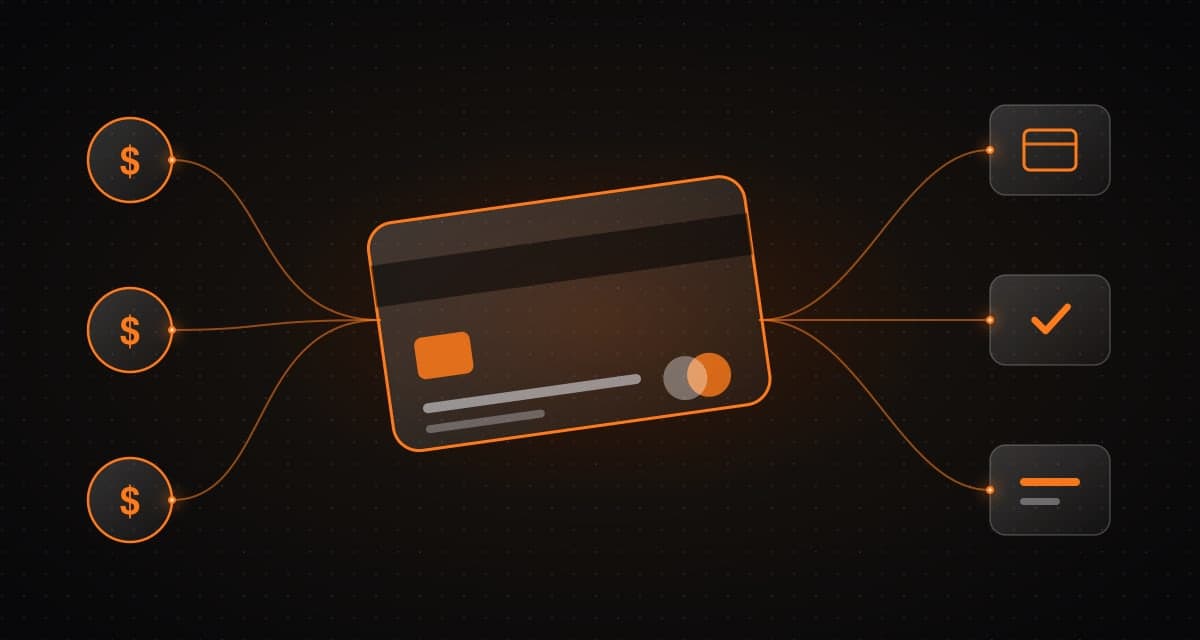
Payments are a system, not a button: checkout, status events, retries, refunds, payouts, reconciliation, reporting and risk monitoring all have to work together. We build the software and integrations around approved providers.
We do not hold funds or act as a bank, payment aggregator, lender or custodian. Regulated activities require suitable authorisations and partners.
Typical situations
- Adding or replacing a payment gateway
- Routing payments across several providers
- Finance teams reconciling by spreadsheet
- Managing refunds, chargebacks and disputes
- Monitoring transactions for fraud and unusual patterns
- Supporting multi-currency or digital-asset payment flows
What we offer in Payments & FinTech
Every capability below explains what it is, how it is typically delivered and the practical value for you. Select one for the full details.
Payment integration & orchestration
- 11.1
Payment Gateway Integration & Custom Payment Infrastructure
We integrate payment providers into web or mobile applications, including checkout, payment initiation, status webhooks, refunds, error handling, and reporting.
View details - 11.2
Multi-Gateway Integration & Payment Routing
We connect multiple providers and apply configured routing based on availability, payment method, geography, or business rules, with fallback and duplicate-charge controls.
View details - 11.3
Payment Orchestration & Intelligent Routing
An orchestration layer coordinates payment services through unified integrations, routing rules, monitoring, and operational controls.
View details - 11.4
Payment Links & Checkout Systems
We build hosted or embedded checkout journeys with order references, payment status, notifications, and order-system integration.
View details - 11.5
Recurring Payments & Subscription Billing
Billing workflows manage plans, renewals, payment attempts, cancellations, and subscription status using supported provider capabilities and required consent.
View details - 11.6
Payment Status Tracking & Webhooks
We implement verified webhooks, idempotency, retries, event logs, and reconciliation so payment events update the application reliably.
View details - 11.7
Payment Failure Detection & Retry
We classify failures and schedule eligible retries where provider rules and customer consent permit, with monitoring by method or provider.
View details - 11.8
Refund, Reversal & Chargeback Workflows
We track refund requests, validate references, route approvals, monitor provider status, and organise dispute evidence.
View details
Banking, payouts & cross-border
- 11.9
Banking API & Financial Service Integration
We connect approved banking or financial APIs for permitted data and operations, with authentication, consent, rate-limit, and error handling.
View details - 11.10
Payout, Disbursement & Settlement Automation
Payout workflows manage beneficiaries, approvals, provider initiation, status tracking, and reconciliation with limits and audit records.
View details - 11.11
Virtual Account & Beneficiary Integrations
Where supported, we integrate virtual-account and beneficiary workflows, including creation requests, validation, status tracking, and audit records.
View details - 11.12
Multi-Currency Payment Integration
We integrate providers that support multiple currencies and record conversion and settlement details under provider rules.
View details
Reconciliation, ledger & reporting
- 11.13
Automated Payment Reconciliation
We match gateway, bank, order, invoice, settlement, and ledger records using references and rules, routing unmatched items for review.
View details - 11.14
Settlement Reconciliation & Reporting
We compare provider payout reports with bank credits and internal records, accounting for fees, refunds, reserves, and timing where data is available.
View details - 11.15
Invoice-to-Payment Matching
The system links invoices and orders to payment events using references, amounts, dates, and customer identifiers, routing ambiguous matches to review.
View details - 11.16
Transaction Ledger & Financial Records
We build or integrate systems that track financial events, references, statuses, and adjustments with traceable history and suitable controls.
View details - 11.17
Payment Dispute Management
Workflows organise dispute notifications, deadlines, evidence, communications, and case status, integrated with provider or ticketing systems.
View details - 11.18
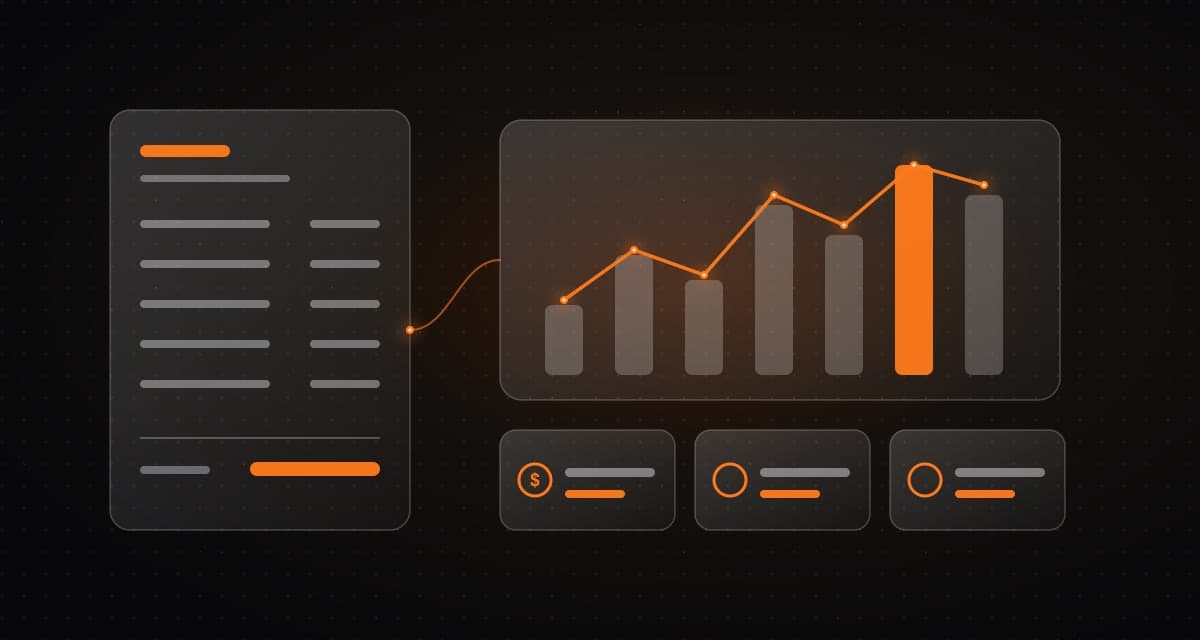
Revenue Tracking & Financial Dashboards
We combine transaction, fee, refund, settlement, and revenue data into documented metrics and dashboards.
View details
Platforms & financial products
- 11.19
Digital Payment Platform Development
A platform can include onboarding, provider-based payment initiation, transaction history, notifications, reporting, and administration.
View details - 11.20
Merchant Management Systems
Merchant tools support onboarding records, configuration, payment activity, settlements, support cases, permissions, and reporting.
View details
Reconciliation, ledger & reporting
- 11.21
Payment Operations Dashboards
Dashboards track payment volume, success rates, provider status, failures, refunds, and settlement exceptions using defined metrics.
View details - 11.22
Financial Management & Accounting Integrations
We connect business applications with accounting tools to exchange invoices, fees, payment references, tax fields, and settlement records.
View details
Platforms & financial products
- 11.23
Lending & Credit Workflow Platforms
Software can manage applications, documents, case routing, status, and reporting for lending workflows, with careful controls around decisioning.
View details - 11.24
Wallet Infrastructure & Digital Wallet Integrations
We integrate wallet providers or build wallet-related features where the legal and technical model supports them, with explicit custody and key boundaries.
View details - 11.25
Financial SaaS Product Development
We build financial workflow products with portals, reporting, subscriptions, access controls, and payment or accounting integrations.
View details - 11.26
B2B Payment & Business Transaction Systems
B2B systems coordinate invoices, approvals, supplier records, payment instructions through approved providers, and transaction reconciliation.
View details
Security, fraud & risk
- 11.27
Payment API Security Assessment
We review payment APIs for authentication, authorisation, validation, secrets, webhook verification, rate limits, logs, and transaction-data exposure.
View details - 11.28
AI-Assisted Fraud Detection
Fraud-support systems analyse defined transaction signals using rules, anomaly detection, or models and route suspicious patterns for review.
View details - 11.29
Suspicious Transaction Monitoring
We apply agreed indicators to identify transactions needing review, enrich alerts with context, and route cases to authorised staff.
View details - 11.30
Payment Risk Scoring & Alerting
Risk scoring combines selected transaction attributes into an indicator for prioritisation or permitted controls, with documented thresholds.
View details - 11.31
Secure Webhook & API Implementation
We implement TLS, signature checks, idempotency, scoped credentials, validation, replay protection where appropriate, and audit logging.
View details - 11.32
Payment Infrastructure Security Reviews
We review payment architecture, access, data exposure, logging, configuration, and operational procedures within an authorised scope.
View details
AI for financial operations
- 11.33
AI-Powered Financial Document Processing
AI extracts and organises information from invoices, statements, remittance advice, and related documents, with validation and human review for uncertain fields.
View details - 11.34
Intelligent Invoice & Billing Analysis
We analyse invoices and billing records to identify missing fields, unusual charges, mismatches, and trends using rules and AI-assisted explanations.
View details - 11.35
Transaction Pattern Analysis
We analyse changes in transaction volume, timing, amounts, counterparties, or other permitted features to surface trends and anomalies.
View details - 11.36
AI Agents for Financial Operations
Controlled agents can gather approved reports, explain variances, prepare reconciliation summaries, and draft case notes using limited permissions.
View details
Banking, payouts & cross-border
- 11.37
Cross-Border Payment API Integration
We integrate supported providers for international workflows, including currency, fees, beneficiary data, status tracking, and settlement references.
View details - 11.38
Foreign Exchange Rate API Integration
We retrieve rates from selected providers and record timestamps and sources, distinguishing indicative rates from rates actually applied.
View details - 11.39
Multi-Currency Transaction Management
We record original currency, settlement currency, conversion details, timestamps, and fees while preserving an audit trail.
View details
Digital assets & crypto payments
- 11.40
Crypto-to-Fiat Provider Integration
Where lawful and supported, we integrate approved providers for crypto-to-fiat workflows, including API status tracking and transaction records.
View details - 11.41
Blockchain-Based Payment Infrastructure
We design supported digital-asset payment flows using blockchain networks or smart contracts, with wallet interaction, confirmation logic, fees, and monitoring.
View details - 11.42
Stablecoin Payment Integration
Where lawful and supported, we connect applications to providers or blockchain infrastructure for stablecoin transfers, including asset/network validation and records.
View details
Technologies and methods we commonly use
The exact stack follows your systems and constraints. These are the tools and approaches that often come up in this area.
- Payment provider APIs
- Webhooks & idempotency
- PostgreSQL ledgers
- Kafka & queues
- Reconciliation engines
- FastAPI
- Next.js
- Fraud rules & models
How we deliver
- Step 1
Discover
Map the workflow, data, risks and constraints before any design work starts.
- Step 2
Architect
Define the system, integrations and human-approval points as a reviewable design.
- Step 3
Build
Deliver a practical first slice, then extend it in small, tested increments.
- Step 4
Operate
Monitor, secure and continuously improve the system after launch.
Frequently asked questions
Do you process or hold our customers' money?
No. We build software and integrate suitable providers; funds are handled by authorised partners.
How do you avoid duplicate charges?
With idempotent webhooks and carefully designed retry and routing logic, tested against provider rules.
Can you work with crypto or stablecoins?
Where lawful and supported, with attention to licensing, KYC/AML, custody and jurisdiction.
Reference architectures
Solution concepts that show how we approach this work. They are proposed architectures, not claimed client deployments.

Explore other service areas
 01
AI Development & Intelligent Automation
We design practical AI systems that help teams understand information, make decisions, and automate repetitive work. Solutions are tailored to business needs and integrated with existing systems where appropriate.
- Custom AI Solutions & Integration
- AI Agents & Multi-Agent Systems
- Generative AI Applications
 02
Cybersecurity & Security Audits
We help organisations identify weaknesses, strengthen controls, and reduce avoidable technology risk through authorised assessments, secure implementation, configuration reviews, and remediation guidance.
- Smart Contract Security Audits
- Web & API Security Audits
- Vulnerability Assessment & Penetration Testing
 03
Blockchain & Web3 Development
We build blockchain applications where transparent records, decentralised execution, or digital-asset functionality offers a clear benefit. Work may include contracts, interfaces, integrations, and testing.
- Smart Contract Development & Auditing
- DeFi & Staking Platforms
- Tokenization & Digital Asset Infrastructure
Next
Talk through your system with our engineers.
Share the problem and constraints. We will map relevant capabilities to your goals, existing systems and timeline, then define scope and measurable outcomes.